Scars of Extraction, Seeds of Renewal
Landscape of the Niger Delta
A community-led cleanup for Ogoniland, where recycled oil-field hardware and mangrove nurseries do the remediation.
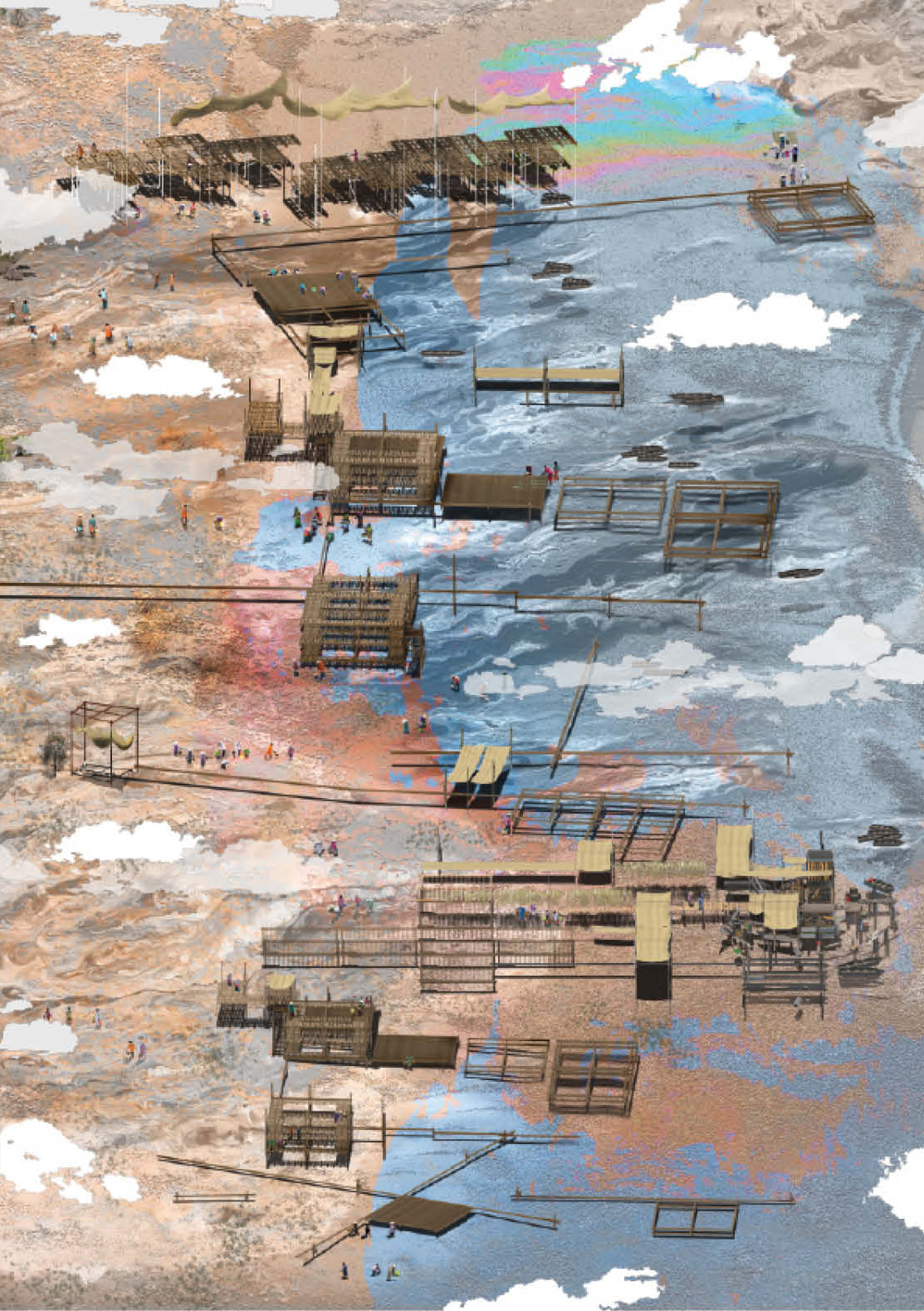
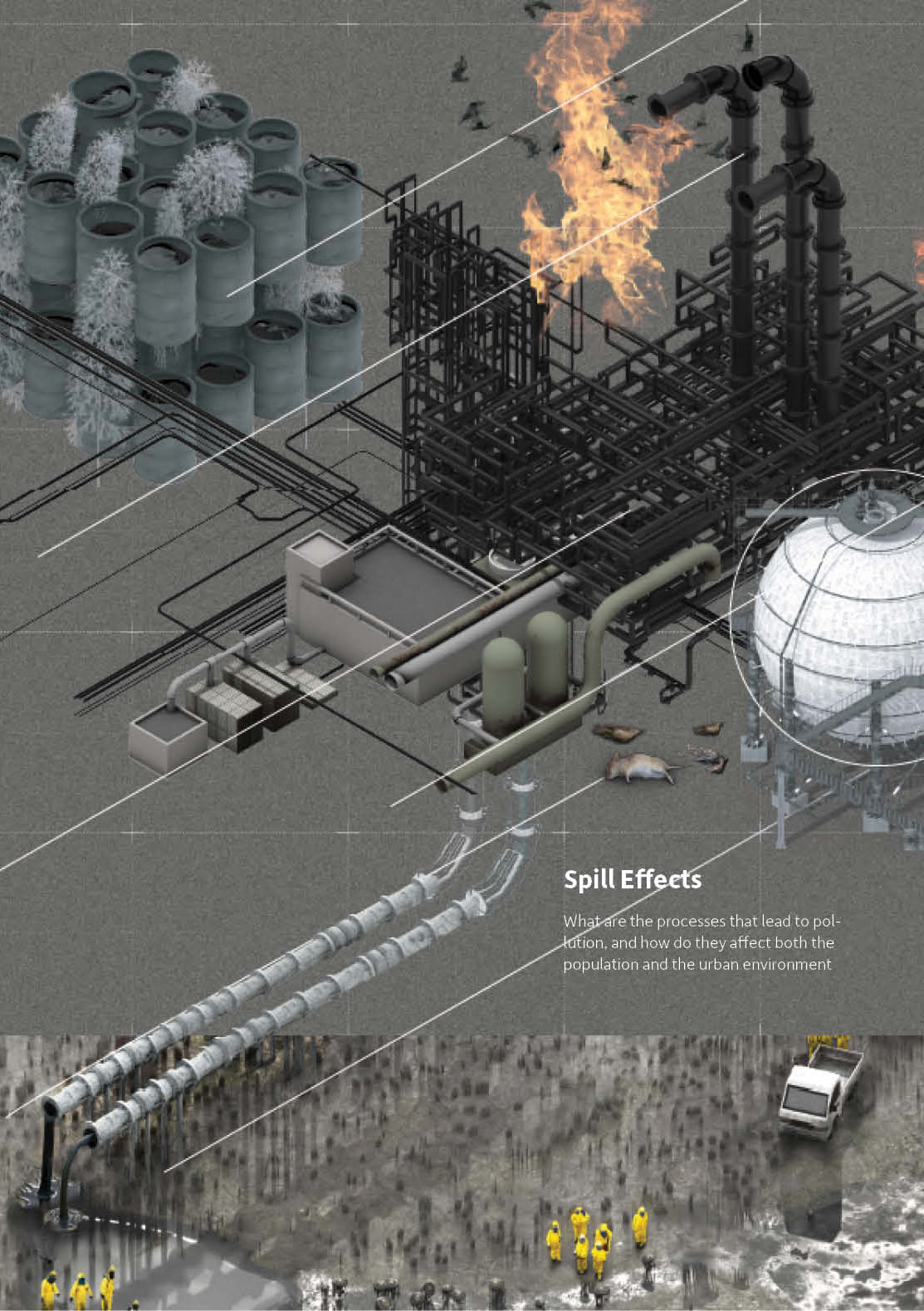
Oil extraction in the Niger Delta, and particularly in Ogoniland, has produced environmental destruction, social injustice and conflict rather than development. Spills, gas flaring and deforestation have damaged the mangrove ecosystems, threatened the livelihoods built on them, and harmed both health and food security.
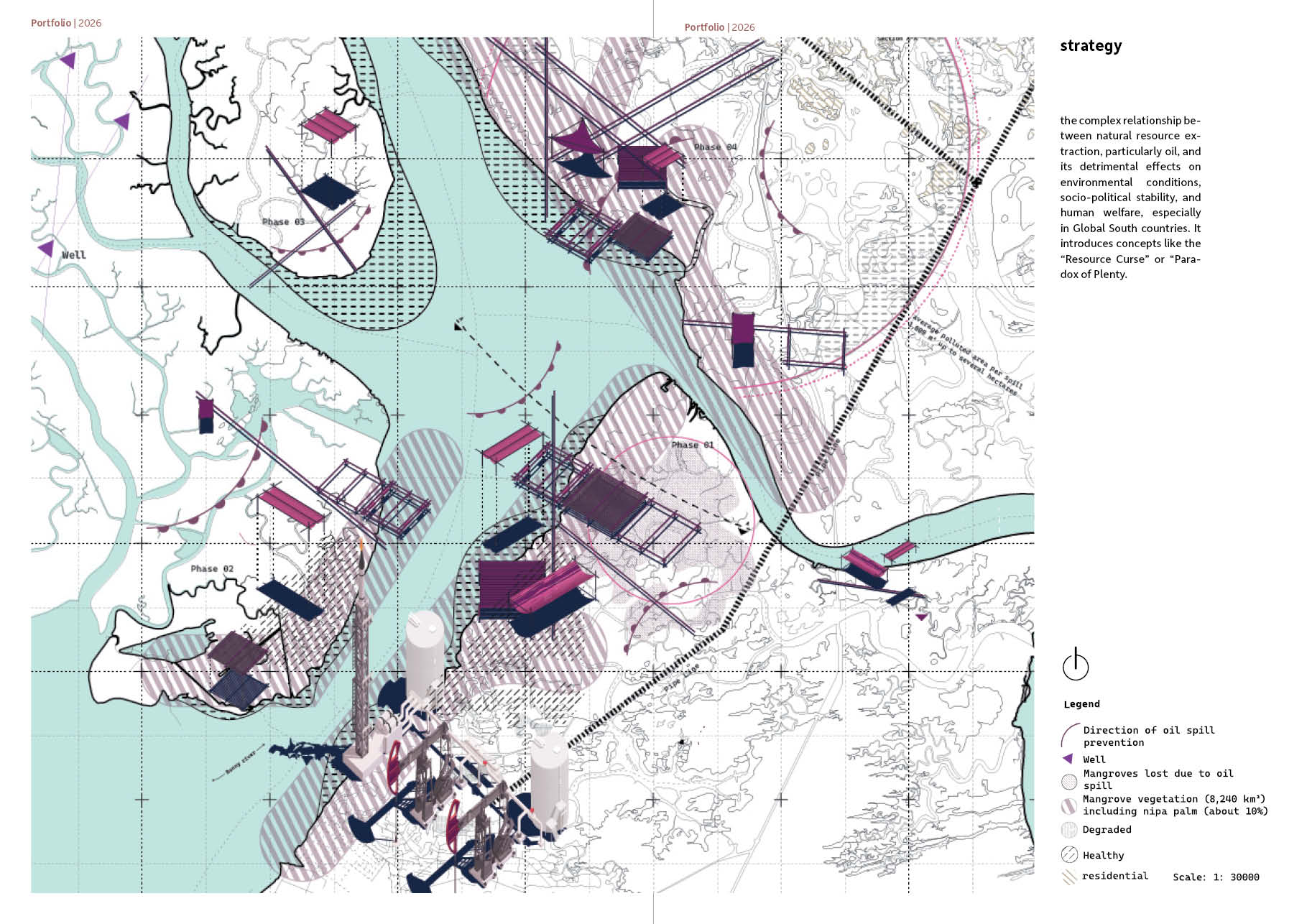
The thesis frames that through the resource curse, petro-violence and ecological colonialism, then tests it against the ground: GIS and the Terrestrial Environmental Sensitivity Index show how much of the coastline is highly vulnerable to spills. Phytoremediation and mangrove restoration offer a route back, but the research is explicit that meaningful restoration depends on transparency, accountability and community participation, not on technique alone.
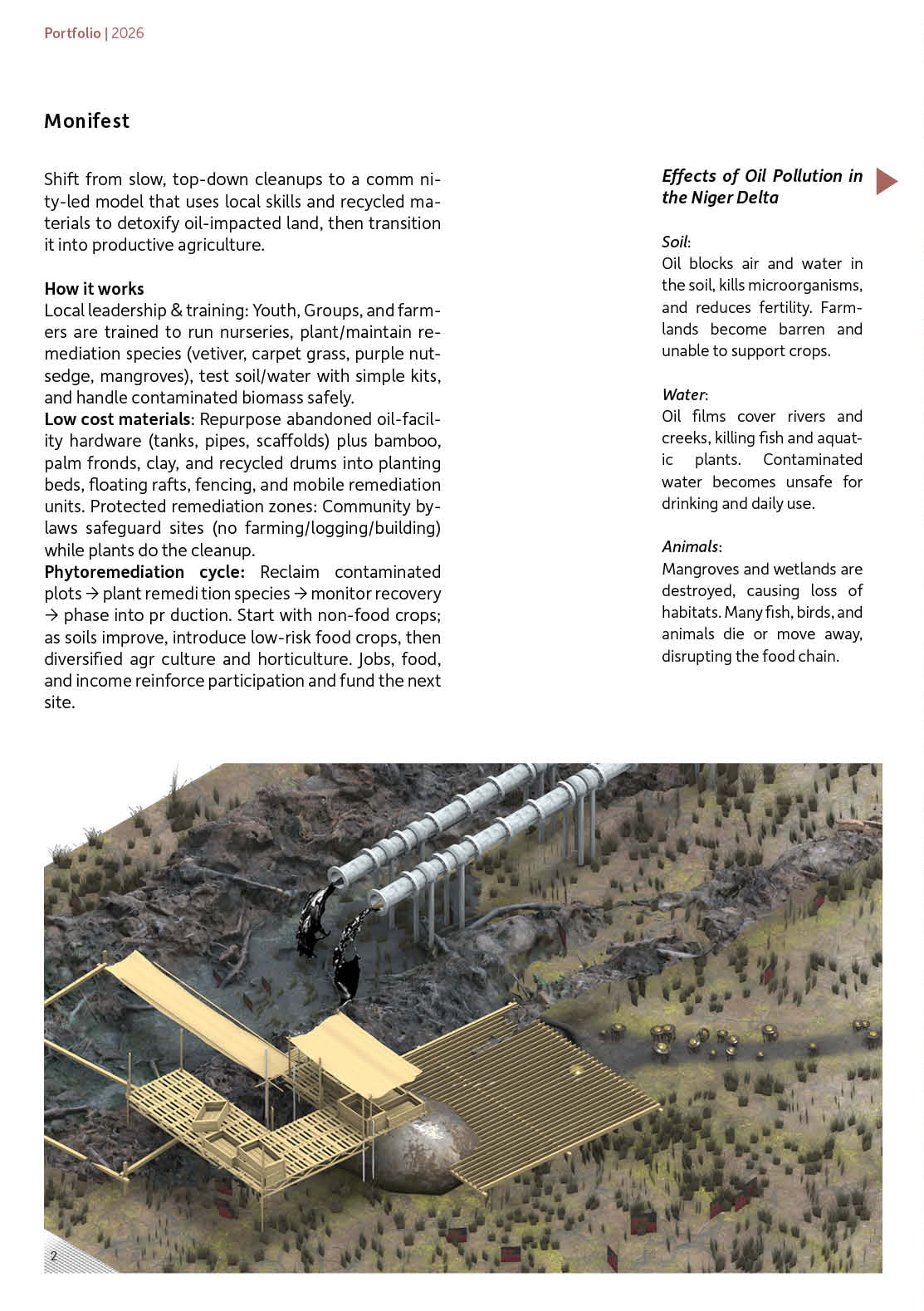
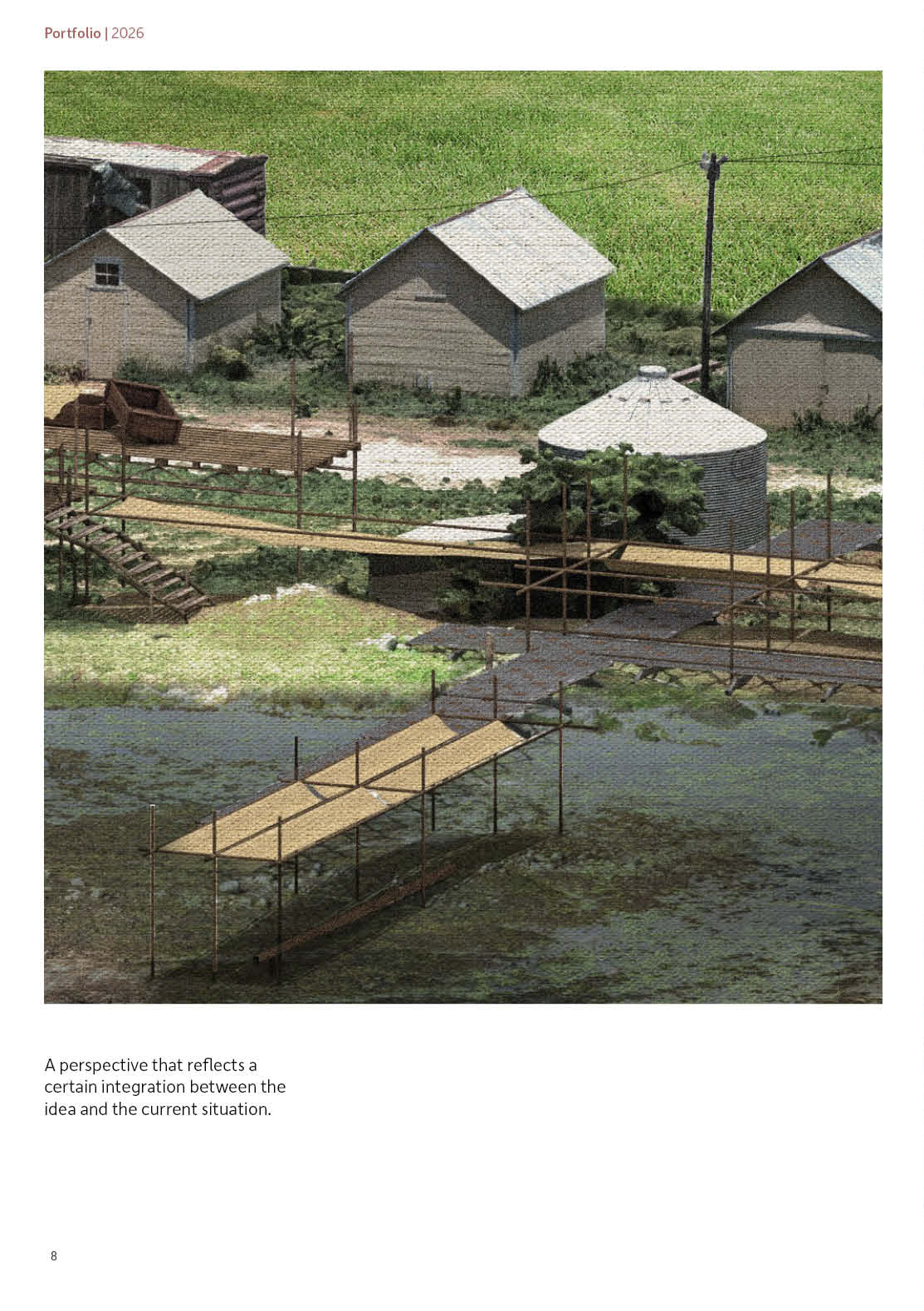
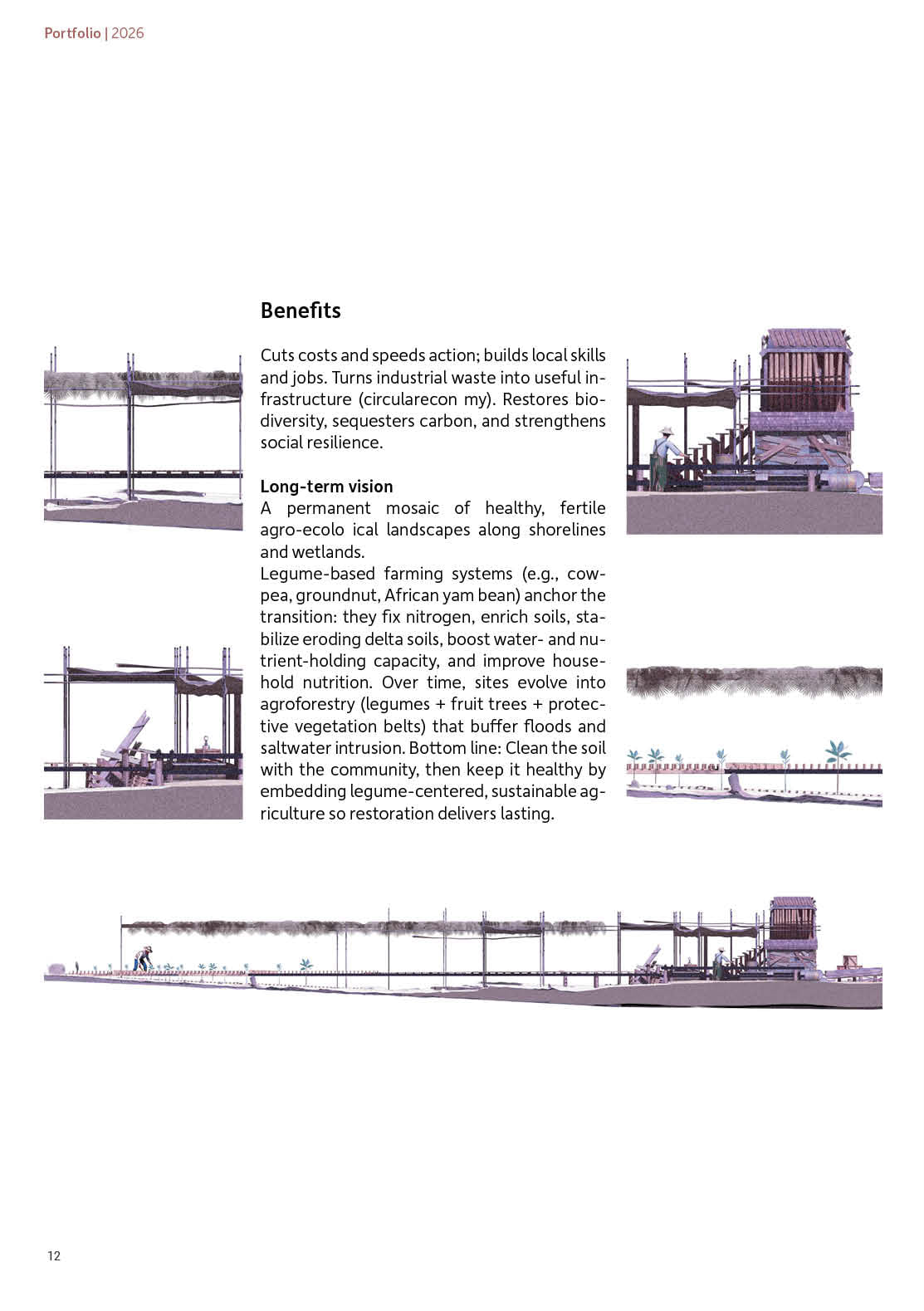
So the proposal replaces slow top-down cleanup with a community-led one. Youth, groups and farmers are trained to run nurseries, to plant and maintain remediation species, to test soil and water with simple kits and to handle contaminated biomass safely. The materials are what the industry left behind: tanks, pipes and scaffolds from abandoned oil facilities, with bamboo, palm fronds, clay and recycled drums, made up into planting beds, floating rafts, fencing and mobile remediation units.
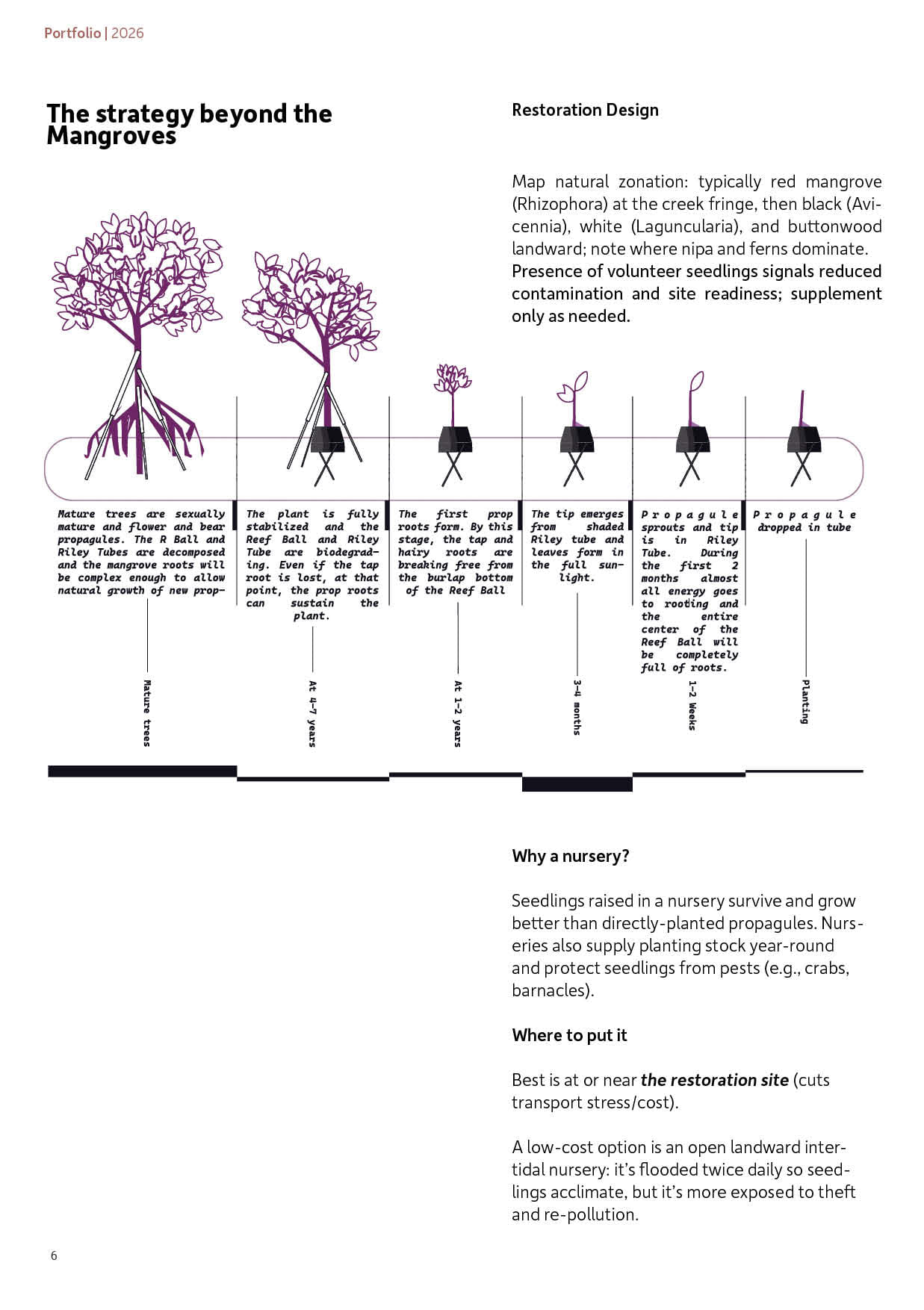
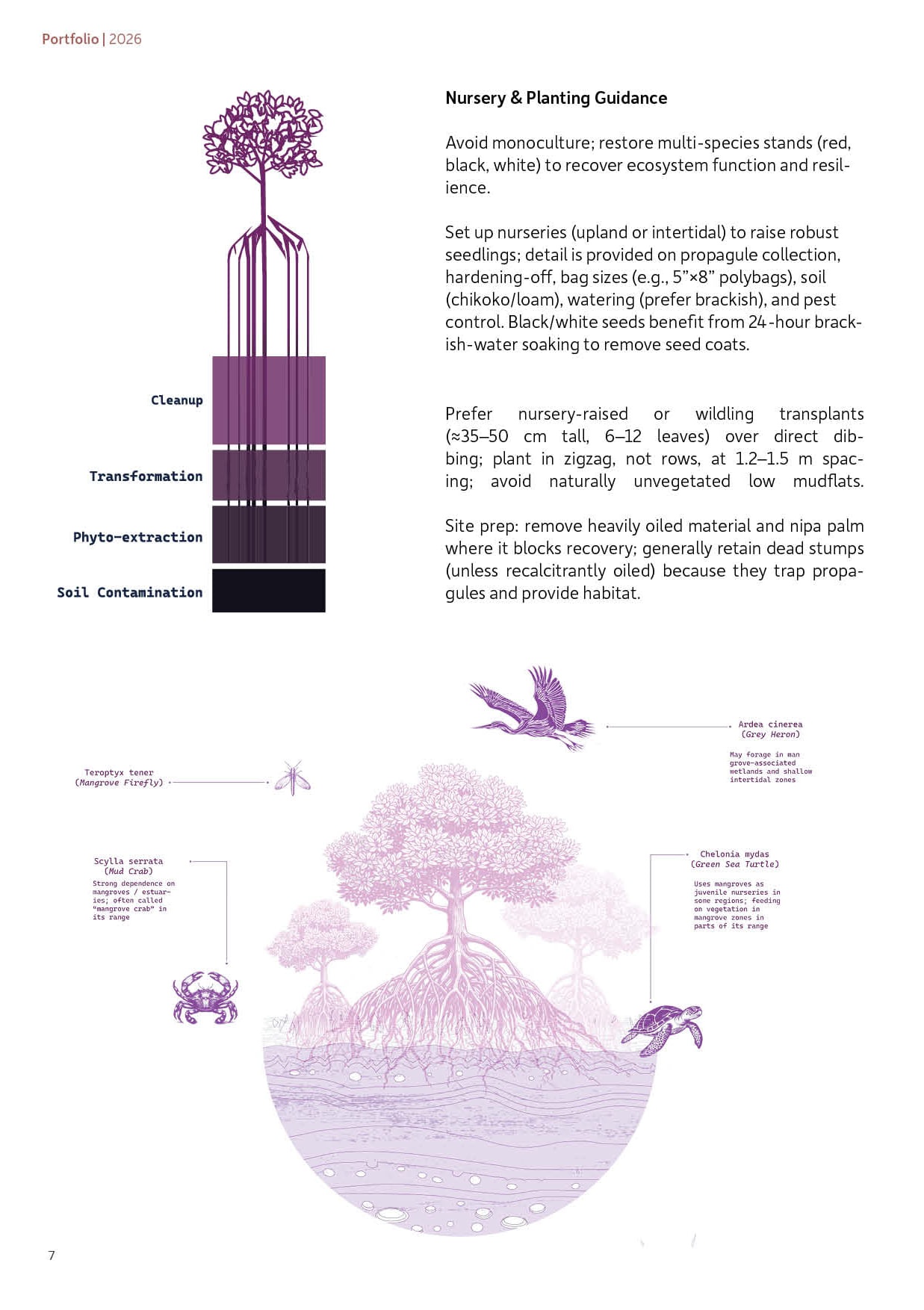
The remediation cycle runs reclaim, plant, monitor, then phase into production. It begins with non-food crops, introduces low-risk food crops as the soil improves, and ends in diversified agriculture and horticulture, so that jobs, food and income fund the next site rather than waiting on a budget. Replanting avoids monoculture: red mangrove at the creek fringe, then black, white and buttonwood landward, raised in nurseries rather than planted directly, and set out in zigzag at 1.2 to 1.5 metre spacing.
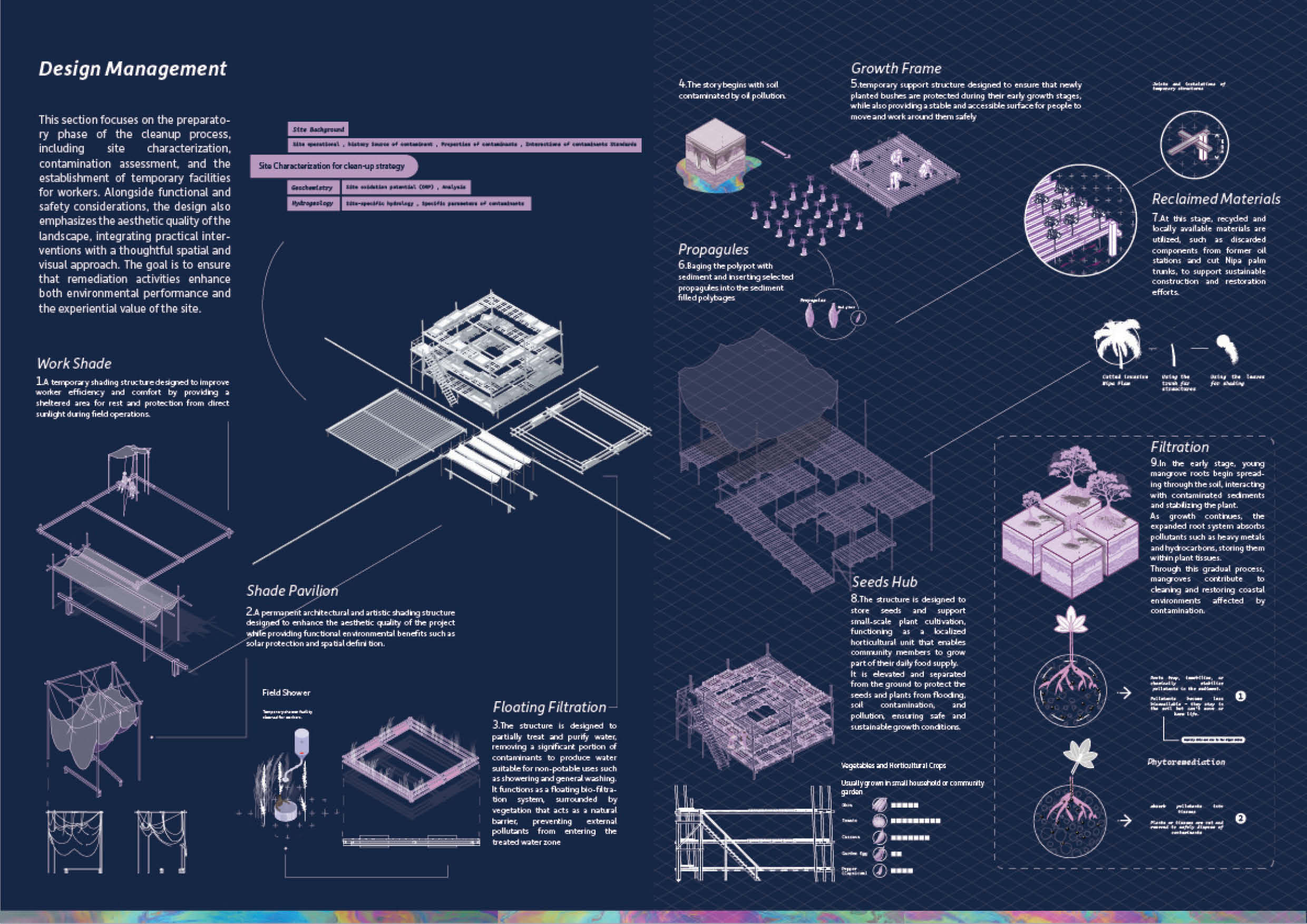
Nine pieces are designed and detailed for the site. A work shade and a shade pavilion, a floating filtration unit and a field shower for the people doing the work. A growth frame protecting new planting, propagules bagged into sediment-filled polybags, reclaimed materials, and a seeds hub lifted clear of flooding and contamination. Then filtration, where the mangrove roots themselves take the heavy metals and hydrocarbons up into plant tissue, which is the whole argument of the project in one detail.
- Ogoniland, Niger Delta, Nigeria
- 2025
- Final exam · Politecnico di Milano
- Laura Daglio, supervisor · Fyneface Dumnamene Fyneface, co-supervisor
- Individual thesis
- Research · Concept design · Strategy · Masterplan · Detail design · Drawings and render
- Rhino · Illustrator · Photoshop · QGIS · Twinmotion · V-Ray
Academic work, and mine end to end.